

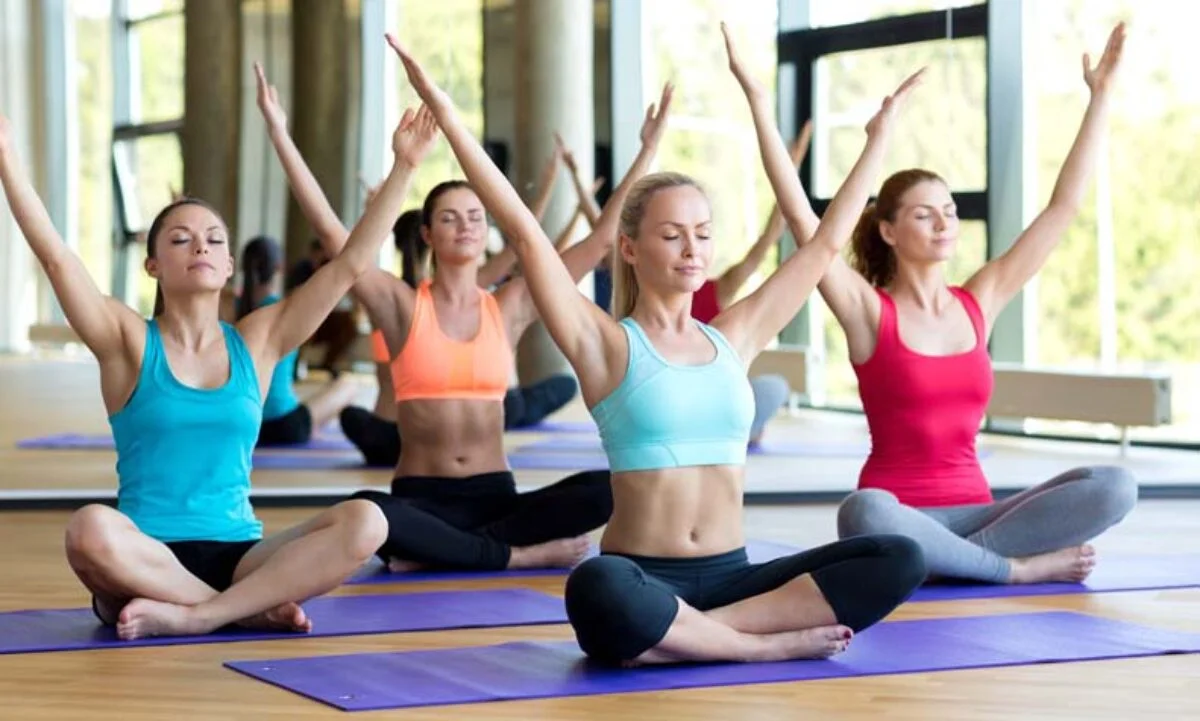
There is a pattern emerging across Singapore’s central business district that human resources managers, building tenants, and wellness programme coordinators are beginning to notice with growing interest. Professionals in the Raffles Place, Marina Bay, and Novena office corridors are increasingly factoring proximity to a quality yoga studio into their daily routine in the same way that a previous generation factored in proximity to a good coffee shop or a hawker centre with a short queue.
This is not a lifestyle trend in the superficial sense. It is a behavioural shift driven by something more fundamental: these professionals are discovering that regular access to a yoga studio near me during the working week produces measurable changes in their performance, recovery, and long-term career sustainability that no other accessible intervention currently matches.
The Recovery Economics Framework
The concept of recovery economics is relatively new in the business literature but draws on decades of research from sports science, occupational health, and cognitive neuroscience. The central argument is straightforward: the productive output of a knowledge worker is not primarily determined by the number of hours they work but by the quality of cognitive resource recovery that happens between working periods.
An employee who works twelve hours a day in a chronically under-recovered state produces lower quality outputs, makes more errors, has worse interpersonal interactions, and is significantly more likely to become ill or burnt out within a twelve to eighteen month window than an employee who works eight focused hours with adequate recovery investment built into their routine. This is not an opinion. It is supported by research from institutions including Harvard Medical School, the National University of Singapore’s Centre for Sleep and Cognition, and the occupational health literature on sustainable high performance.
The question of what constitutes effective recovery is where yoga distinguishes itself from most alternatives available to the CBD professional.
Why Yoga Outperforms Other Midday and Post-Work Recovery Options for Office Workers
The alternatives most commonly available to Singapore’s CBD workforce include:
Eating lunch at a food court: Provides caloric replenishment but does nothing to address the postural loading, accumulated fascial tension, eye strain, or nervous system dysregulation that builds across a working morning. Many professionals return from lunch to their desk feeling more sluggish rather than recovered.
A midday walk along the Marina Bay waterfront: Better than nothing, and genuinely useful for mild cortisol reduction and vitamin D exposure. But walking at a moderate pace does not decompress the spinal structures loaded by prolonged sitting, does not restore the breath mechanics compressed by desk posture, and does not reach the parasympathetic depth that would meaningfully reset the stress response system.
Office gym use: Valuable for cardiovascular health and general fitness maintenance, but unless the programme includes structured breath work, full-range mobility training, and nervous system regulation, it does not address the specific recovery deficits of knowledge work. Many professionals find that high-intensity gym sessions after a stressful day increase rather than reduce their sympathetic activation, making it harder to wind down in the evening.
Yoga at a nearby studio: A sixty to ninety minute yoga session that includes movement, pranayama, and closing relaxation addresses postural restoration, parasympathetic activation, fascial decompression, and attentional reset simultaneously. No other single accessible activity delivers this combination. The context shift of leaving the office environment, entering a dedicated practice space, and focusing entirely on physical and breath awareness for ninety minutes is cognitively restorative in a way that cannot be achieved by staying in or near the same environment where the work stress is accumulating.
The Specific Postural Recovery Argument for Desk Workers
Singapore’s professional population spends more time in sustained spinal flexion and forward head posture than almost any other configuration the human body encounters. The consequences accumulate in specific, predictable ways:
- The hip flexor complex becomes chronically shortened, pulling the pelvis into anterior tilt and compressing the lumbar facet joints
- The thoracic spine loses its natural mobility curve and stiffens into a sustained kyphotic position
- The deep cervical flexors weaken as the superficial neck extensors chronically overwork to hold the head forward
- The gluteal muscles deactivate progressively, removing the primary posterior chain stability anchor
- The diaphragm becomes restricted by the compressive thoracic posture, reducing both breathing capacity and the vagal stimulation that proper diaphragmatic excursion provides
A sixty-minute yoga session specifically designed to address these patterns, including thoracic extension work, hip flexor lengthening, posterior chain activation, and diaphragmatic breathing restoration, can meaningfully reverse the day’s postural loading. Done consistently across a working week, this prevents the cumulative structural loading that becomes musculoskeletal injury and chronic pain over months and years.
The Ministry of Manpower’s workplace injury statistics consistently list musculoskeletal disorders as the leading category of occupational health condition in Singapore. The majority of these are not dramatic injuries but cumulative strain conditions that develop over time in sedentary work environments. Proximity to a yoga studio and consistent use of it is one of the most effective preventive investments a professional can make against this category of occupational health cost.
What Forward-Thinking Singapore Employers Are Starting to Understand
A growing number of Singapore employers are moving beyond token wellness programmes, the fruit bowl in the pantry and the occasional lunch-and-learn on sleep hygiene, and beginning to invest in structured access to nearby movement facilities as part of their talent management strategy.
The business case is based on several measurable returns:
Reduced absenteeism: Research from the National Institute for Occupational Safety and Health and various European occupational health bodies has consistently found that employees with access to structured physical wellness programmes take fewer sick days, particularly for musculoskeletal and stress-related conditions, which are the two leading causes of short-term absence in Singapore’s professional sector.
Improved presenteeism outcomes: Presenteeism, the cost of employees being physically present but mentally or physically impaired, is estimated to cost Singapore’s economy significantly more than absenteeism. Knowledge workers experiencing chronic physical discomfort, fatigue, or anxiety operate at a fraction of their cognitive capacity. Addressing these conditions through structured recovery practice has measurable effects on output quality.
Talent attraction and retention: In a competitive labour market for skilled professionals, the quality of a workplace wellness offering has become a meaningful differentiator. Group yoga memberships at a nearby studio are increasingly appearing as a specific benefit request from candidates across professional sectors in Singapore, particularly among professionals aged twenty-eight to forty-five who have begun to prioritise sustainable career longevity alongside compensation.
Reduced healthcare costs: For organisations that carry group health insurance costs, the actuarial relationship between musculoskeletal health, chronic stress burden, and insurance utilisation is well-established. Proactive investment in physical wellness reduces the back-end healthcare expenditure that musculoskeletal and stress-related conditions generate.
The Proximity Advantage in Practice
For all of these benefits to materialise, proximity matters enormously. A yoga studio membership is only useful if the location makes it convenient enough to actually attend consistently. This is where the geography of Singapore’s business districts intersects directly with the practicality of maintaining a regular practice.
A studio within a ten to fifteen minute walk of the workplace can be integrated into the working day as a lunchtime session, an early morning pre-work practice, or a post-work session before commuting home. A studio that requires a forty-five minute MRT journey effectively removes itself from the daily routine for most professionals regardless of their genuine intention to attend.
The practical reality is that consistency, not intensity or sophistication of practice, is the primary driver of all the benefits outlined above. A professional who attends a nearby studio three times per week for modest sixty-minute sessions consistently across a year will accumulate physiological and cognitive benefits that dwarf those of someone who attends intensively for two months and then drops off because the logistics are unsustainable.
Yoga Edition operates studios at Millenia Walk, Novena, and CIMB Plaza in Raffles Place, placing quality yoga practice within genuinely practical reach of professionals across Singapore’s major commercial zones and making the logistics of consistent practice as frictionless as possible for the working population it serves.
FAQ
Q. How do I convince my employer to subsidise a yoga studio membership as part of my benefits package? A. Frame the proposal in terms of measurable business outcomes rather than personal wellness preferences. Cite the Ministry of Manpower data on musculoskeletal disorders as the leading occupational health cost, reference the research on presenteeism and cognitive performance, and propose a six-month pilot with a small group of willing participants. Offer to track simple proxies like sick day frequency and self-reported focus levels before and after. Most HR managers respond better to a structured pilot than an open-ended benefit request.
Q. What time slots work best for CBD professionals who want to integrate yoga into their working week? A. Early morning sessions before office hours, typically 7am to 8.30am, work well for professionals whose employers expect them at desks by 9am. Lunchtime sessions of sixty minutes fit within a standard one-hour lunch break if the studio is within walking distance. Evening sessions at 6.30pm to 8pm capture the post-work window before dinner and allow for cortisol reduction before sleep. The “best” slot is the one that can be sustained consistently rather than the one that theoretically offers the greatest physiological benefit.
Q. Is there a yoga style that is particularly suited to the recovery needs of someone in a high-pressure finance or legal role? A. Yes. Yin Yoga and restorative yoga are particularly well-matched to the nervous system recovery needs of professionals in chronically high-stress roles because they directly target parasympathetic activation and connective tissue decompression. Vinyasa or power yoga can be valuable for general fitness but may not deliver the nervous system downregulation that these professionals most need. A mix of active and restorative classes across the week is generally the most effective strategy.
Q. How quickly do the cognitive performance benefits of regular yoga practice become noticeable in a professional context? A. Most practitioners in high-stress professional roles report noticeable improvements in focus, emotional regulation under pressure, and evening sleep quality within three to four weeks of consistent practice two to three times per week. More structural benefits, including reduced chronic physical tension, improved postural habits, and sustained stress resilience, typically become pronounced at the eight to twelve week mark. The initial improvements are often most noticeable in interpersonal dynamics, specifically in the ability to remain composed in high-stakes meetings and to disengage from work thoughts more effectively at the end of the day.

Comments are closed.