

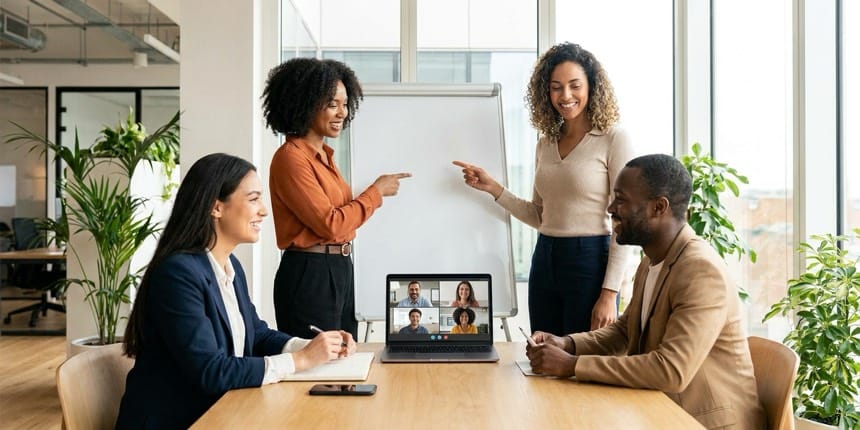
Remote work is no longer an emergency response to global disruption; it has become a permanent structural shift in how modern businesses operate. What began as a temporary necessity has evolved into a strategic advantage for companies aiming to attract top-tier talent, lower operational overhead, and foster continuous innovation.
As organizations refine their operational models, the conversation around remote work has moved past whether off-site employees can remain productive. Forward-thinking enterprises are now focused on building sustainable remote infrastructures. The future of distributed work centers on intentional hybrid models, asynchronous communication workflows, artificial intelligence integration, robust digital security architectures, and outcome-oriented management philosophies.
The Shift from Synchronous Overload to Asynchronous Communication
Early remote work implementations struggled because leadership teams attempted to replicate traditional in-person office habits through endless video conferences and instant messaging alerts. This approach created digital fatigue and fragmented deep work cycles. The future of remote work relies on asynchronous operational workflows.
-
Documentation-First Culture: Rather than holding recurring meetings for project updates, distributed teams use shared workspaces, collaborative documents, and structured knowledge bases to track progress and document decisions.
-
Deep Work Protection: Asynchronous environments allow team members to engage in uninterrupted periods of cognitive focus without the expectation of an immediate response to every chat message.
-
Time-Zone Agnostic Operations: Companies can hire talent across different hemispheres without forcing international employees to work overnight shifts to attend live administrative calls.
-
Recorded Video Briefs: Replacing thirty-minute conference calls with short, screen-recorded video walkthroughs allows colleagues to review technical project overviews at their convenience and refer back to them as needed.
By reducing reliance on real-time presence, modern businesses improve documentation quality, cut down on unnecessary meetings, and give employees the autonomy to work when they are most productive.
Reimagining Corporate Real Estate and Hybrid Frameworks
The growth of distributed work does not mean the physical office has disappeared completely; instead, its fundamental purpose has changed. Modern companies are downsizing vast corporate campuses and converting remaining physical footprints into dynamic collaboration centers.
Rather than housing rows of assigned cubicles for individual task execution, the modern hybrid office is designed for collective brainstorming, client presentations, cross-functional hackathons, and company culture events.
-
Desk Hoteling and Flexible Hot-Desking: Employees reserve desks and private phone booths on-demand via mobile applications only when they choose to come to an office location.
-
Structured Hybrid Schedules: Many organizations adopt structured hybrid frameworks, designating specific days for in-person collaboration while leaving remaining days reserved for focused remote execution.
-
Regional Collaboration Hubs: Instead of maintaining a single massive headquarters in an expensive metropolitan hub, enterprises are leasing flexible co-working footprints in secondary and tertiary cities closer to where their distributed workforce resides.
This spatial evolution reduces commercial lease liabilities, lowers utility consumption, and accommodates flexible employee schedules.
Global Talent Acquisition and Borderless Teams
Geography was once the ultimate constraint in hiring. Companies had to recruit candidates located within a reasonable commuting radius or sponsor costly relocation packages. Remote work has turned talent recruitment into a borderless process.
| Traditional In-Office Recruiting | Modern Distributed Hiring Model | Strategic Advantage |
| Limited to local metropolitan labor pool | Access to national and worldwide talent | Accesses specialized niche skills rapidly |
| High employee relocation expenses | Zero geographic relocation overhead | Cuts talent acquisition costs substantially |
| Compensation tied to expensive city hubs | Tiered or localized compensation frameworks | Optimizes total corporate payroll efficiency |
| Vulnerable to hyper-local talent shortages | Resilient global candidate pipelines | Accelerates time-to-hire across open roles |
Modern enterprises partner with global Employer of Record platforms to navigate international labor laws, statutory benefits, currency conversions, and local tax withholding. This legal infrastructure allows businesses to build compliant, multi-country teams without establishing costly foreign corporate entities in every jurisdiction.
Outcome-Oriented Performance Management Over Presence
Traditional office cultures frequently evaluated employee performance based on physical presence, such as who arrived earliest and stayed latest. In a decentralized environment, measuring work by hours spent sitting in a chair is ineffective.
The future of remote leadership requires transitioning toward strict outcome-based performance evaluations:
-
Establishing Clear Key Performance Indicators: Managers and individual contributors agree on clear deliverables, deadlines, and quality standards for every project.
-
Eliminating Intrusive Surveillance Software: Using keystroke loggers, screen capture software, and webcam tracking tools destroys workplace trust and damages employee morale. High-performing organizations focus on work quality rather than surveillance metrics.
-
Continuous Feedback Loops: Annual performance reviews are replaced with weekly or bi-weekly one-on-one alignment sessions focused on resolving operational roadblocks, providing mentorship, and planning career progression.
-
Empowering Worker Autonomy: Granting employees the freedom to manage their own schedules builds personal accountability, improves job satisfaction, and reduces turnover across technical and creative roles.
Evaluating workers on delivered results rather than visible activity creates a merit-based environment that rewards efficiency and innovation.
Modern Technological Infrastructure and AI Integration
Advanced software tools are the backbone of high-functioning distributed organizations. Today’s remote work technology goes beyond basic email and video calling, integrating artificial intelligence and cloud computing to streamline team collaboration.
-
AI-Powered Meeting Assistants: Machine learning tools transcribe video calls automatically, generate concise summaries, and assign action items to relevant team members instantly.
-
Interactive Digital Whiteboarding: Real-time visual collaboration tools enable distributed design and engineering teams to brainstorm, map user journeys, and wireframe products collaboratively.
-
Centralized Project Management Engines: Cloud-based platforms centralize task assignments, resource allocation, and milestone dependencies, giving executive leadership real-time visibility into operational bottlenecks.
-
Zero-Trust Cybersecurity Architecture: Distributed networks demand modern security paradigms. Implementing multi-factor authentication, endpoint device management, encrypted virtual private networks, and continuous identity verification ensures that company assets remain protected across remote home networks.
Investing in integrated cloud tools ensures that remote employees have access to the exact resources, software, and computational power required to execute their responsibilities securely from any location.
Fostering Community and Mitigating Worker Isolation
While remote work provides unmatched autonomy, it can also lead to professional isolation, blurred boundaries between work and personal life, and reduced spontaneous collaboration if not managed intentionally.
Modern organizations build connection through deliberate cultural initiatives:
-
Annual and Bi-Annual In-Person Summits: Flying distributed teams together for structured company retreats, team-building workshops, and social dinners builds the interpersonal trust that sustains months of digital collaboration.
-
Dedicated Social Communication Channels: Creating informal digital spaces for hobbies, shared interests, pets, and non-work discussions gives team members a natural way to bond across departments.
-
Enforcing Digital Boundaries: Establishing firm expectations around communication hours and encouraging employees to log off outside of core working windows prevents burnout and supports long-term retention.
-
Wellness and Home-Office Stipends: Providing recurring financial allowances for ergonomic chairs, standing desks, gym memberships, and mental health resources ensures that employees maintain healthy physical and mental routines at home.
Frequently Asked Questions
How do companies handle payroll taxes when hiring remote workers across different states or countries?
When hiring across various states or countries, businesses must register with local state tax authorities, comply with local employment regulations, or partner with an Employer of Record. An Employer of Record legally employs the worker locally on behalf of the client company, handling local tax withholding, healthcare benefits, and statutory compliance.
What are the biggest challenges when building an asynchronous workplace culture?
The main hurdles include overcoming the impulse of managers to demand immediate responses, managing team members who struggle with self-directed time management, and preventing delays on interdependent projects where one person is waiting on feedback from a colleague in a distant time zone.
How does remote work impact professional mentorship and onboarding for entry-level employees?
Junior employees can miss out on the passive observation and casual corridor learning common in physical offices. To bridge this gap, modern companies implement dedicated buddy systems, structured virtual mentorship pairings, regular one-on-one check-ins, and clear digital onboarding checklists.
What is the difference between a fully remote company and a remote-first company?
A fully remote company operates with zero physical office real estate, and every employee works from home or a co-working space. A remote-first company may maintain physical office locations, but all internal processes, meeting structures, and documentation are designed with the assumption that team members are distributed, ensuring that in-office workers receive no unfair procedural advantages over remote colleagues.
How can businesses maintain cybersecurity standards across unsecured home Wi-Fi networks?
Organizations deploy strict Zero Trust security models, provide encrypted company-owned laptops equipped with automated endpoint detection and response software, require multi-factor authentication across all cloud applications, and mandate the use of secure virtual private networks for accessing internal databases.
How does remote work influence overall employee turnover and retention rates?
Companies offering location flexibility consistently report lower voluntary turnover rates compared to organizations with mandatory, full-time office requirements. Workers value the elimination of commuting stress, improved work-life balance, and greater schedule control, making workplace flexibility a decisive factor in long-term employment decisions.
What strategies prevent remote employee burnout when work and home share the same physical space?
Leadership teams can lead by example by not sending messages during off-hours, establishing clear non-working windows, disabling weekend notifications on communication platforms, offering dedicated mental health resources, and encouraging workers to create designated home workspaces that can be stepped away from at the end of each workday.

Comments are closed.